Seed Identification
What Seed Is This? How to Identify an Unknown Seed by Photo
Learn what seed is this from a single photo: what clues a picture can prove, what it can’t, and the quick checks to narrow matches before using an app.
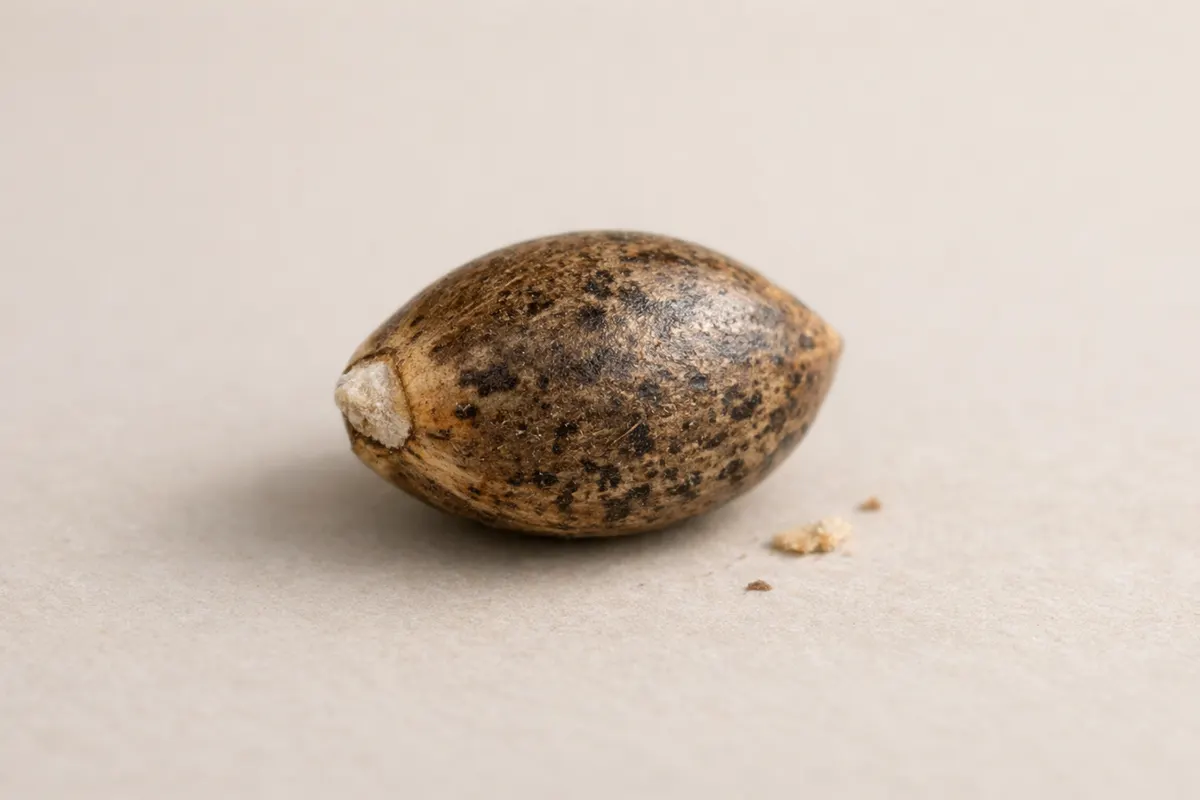
A clear photo can often place an unknown seed into a useful category — for example: legume, nut, samara, or grass seed — which is the fastest way to answer what seed is this without lab tests. The image gives immediate visual evidence like shape, surface texture, and relative size that narrows possibilities and tells you which follow-ups matter most.
Start by photographing the seed on a neutral background with a small ruler or coin for scale, a second angled shot to show profile, and, if present, the attached pod or aril. Those images let an identifier flag likely families and rule out non-seeds such as insect eggs or grit.
A single-photo ID is most valuable as a first pass: it directs whether to look for a matching pod, leaf, or plant habit in the same area, and it prepares you to use a guided app like Seed Identifier - Seedio for a faster, reproducible suggestion with similar photographed matches.


How identification works
Step 1
Snap a photo
Take a clear, well-lit photo of your item in the Seed Identifier - Seedio app.
Step 2
Get an instant identification
The app reads the visible clues and returns the closest matches in seconds.
Step 3
Review the details
Check the attributes, rarity, and estimated value range before deciding your next step.
How to tell what kind of seed is this
Before you run an app, check four visual signals that carry the most diagnostic weight for seeds: size and proportions, surface pattern and texture, any attachment scars (hilum or aril), and whether the seed sits inside a pod, wing, or hard shell. These cues often separate broad groups at a glance.
Lighting and scale are crucial: a glossy black bean and a small insect dropping can look similar without a scale reference. Photograph the seed from above and in profile; a visible crease, notch, or flat side is often the single most telling trait for genus-level guesses.
Season and location add context: a round brown seed found beneath a maple in autumn suggests a nutlet or samara fragment, while a smooth flat seed near a pea family shrub fits legumes. Context doesn’t replace microscopic or genetic tests, but it prevents false matches from visually similar seeds.
If you’re still asking what seed is this, prioritize a clear top-down shot, a side view, and one photo including surrounding plant matter; those three images usually provide enough evidence to rank likely matches and rule out obvious lookalikes.
- Measure the longest dimension against a coin or ruler in the photo so size is explicit — size alone eliminates many genera.
- Note surface texture: striations, pitting, smooth sheen, or hair-like fibers separate groups quickly.
- Record attachment marks: a visible hilum, raphe, or aril scar often identifies family-level traits.
- Capture casing or pod fragments if present: pods, samaras, and burs explain shape and dispersal mode.
- If you wonder what type of seed is this, include soil and leaf context in one frame to show where the seed landed.
What a seed identification result includes
A proper seed identification result from a photo will present a concise set of fields you can act on: a likely family or common name, a ranked list of close visual matches, a confidence estimate tied to visible clues, and the key features that drove the match (for example: size 4–6 mm, oblong, pitted surface, hilum present).
Expect actionable next steps rather than a single authoritative label. Good results tell you which additional photos or local checks would raise confidence — for instance, find the seed’s pod, photograph nearby leaves, or collect multiple seeds from the same plant to compare.
The report should also highlight common lookalikes and caution flags (for toxicity or agricultural pests) so you know when to stop, protect children and pets, or consult a local expert. It will never claim laboratory certainty from one image, but it does prioritize probable families and similar photographed examples.
For real example results and how a photo-based report displays matched images, see Flower Seed Identification by Photo: How to Identify Flower Seeds and Seed Heads for a comparable result format and visual examples.
- Likely identification (family or common name) with a confidence score and supporting photo matches.
- A short list of distinguishing features visible in your photos and which extra shots would improve confidence.
- Context notes: season, habitat cues, and whether local plants make matching seed pods.
- Safety and handling flags if the seed resembles toxic or regulated species.
Things seeds are often mistaken for (and what photos reveal)
Small seeds are frequently confused with pebbles, insect eggs, or plant material like hardened arils; a photo usually reveals differences in surface detail and symmetry that separate these. For instance, pebbles lack hilum scars and often sit differently against the background compared with seeds.
Samara wings and dry fruit halves can look like thin seeds in a single flat photo; a profile shot that shows a thin wing or a wing base is decisive. Likewise, split pods or empty seed coats can mimic whole seeds — a close-up of the interior and the surrounding plant matter will show whether the seed is intact.
If you gathered multiple tiny grains in one photo and ask what seeds are these, separate them with spacing and include a scale so each seed’s shape and texture are visible; that simple step prevents misidentifying mixed samples as a single species.
- Pebble vs. seed: look for hilum or embryo notch; pebbles lack attachment scars.
- Samara or winged fruit: profile view shows thin wing base, not a compact embryo.
- Insect egg or frass: texture and consistent clustering pattern differ from seed arrangements.
- Dried aril or nut fragment: interior view reveals whether hard coat surrounds an embryo.
Frequently asked questions
What is this seed if I only have one photo and no location?
A single photo with no location can usually place a seed into a family or descriptive group (for example: legume-like, nutlet, winged samara), but it rarely provides species-level certainty. Use that initial result to guide the next steps: take a scale photo, add a side profile, and try to photograph any attached pod or nearby foliage to raise identification confidence.
Can a photo reliably answer what seed is this by photo when two species look very similar?
A photo can suggest which of the similar species is more likely by highlighting fine surface texture, size, and attachment scars, but when two species are morphologically near-identical you should treat a single-photo match as provisional. Complement the image with habitat notes or pod/leaf photos, or get a local verification if the seed has legal, agricultural, or toxicity implications.
Which seed is this if I found several different seeds together in one container?
When multiple seed types are present, separate them and photograph each type individually with scale; a combined photo risks blending features and will usually produce ambiguous results. Identifiers prioritize one seed at a time and will ask for representative photos of each distinct shape to confidently sort which seed belongs to which plant.
What seeds are these — how do I identify many small seeds in one photo?
To identify many small seeds in one image, spread them out against a plain background and include a ruler so each seed’s size and surface pattern are visible. If seeds remain ambiguous, select one representative seed of each visual type, photograph it in macro, and submit those individual images for separate matches rather than one crowded photo.
Related guides
Try a first-pass ID with Seed Identifier - Seedio
After you check the visible clues above, use the Seed Identifier - Seedio iOS app to get a ranked, photo-based suggestion and matching images. Treat app results as an informed first pass and follow the app’s guidance for extra photos or local confirmation before making safety, planting, or regulatory decisions.