

Vegetable Seedling Identification: Early Leaves, Stems, and Garden Clues
Practical guidance for vegetable seedling identification: reliable photo clues, common lookalikes, and the next photos to take before you act.
Quick answer: vegetable seedling identification essentials
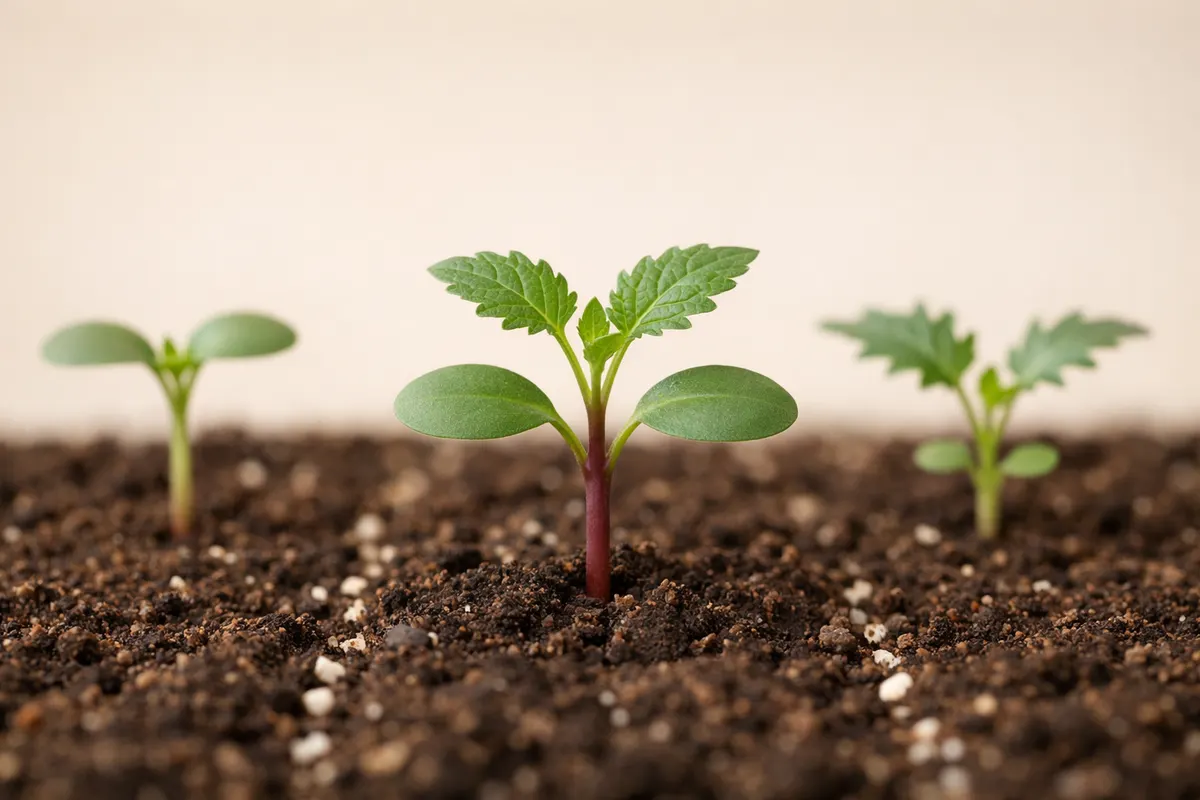
The most useful short answer for vegetable seedling identification is this: start with cotyledons, then confirm with the first true leaves, stem details, and garden context. Cotyledons (the seed leaves) are often the clearest early clue — their shape, size, and whether they are paired or single can quickly exclude many plant families. The first true leaves add pattern and margin details that distinguish common vegetable families like brassicas, solanums, and cucurbits.
Use four practical photo angles before deciding: a flat top-down shot of the whole seedling, a close crop of the cotyledons, a side view showing stem length and hairiness, and a wider shot showing row spacing or nearby planted seeds. Those four images together usually reveal whether a young plant is likely a seeded vegetable, a volunteer crop, or a common weed, and they reduce the risk of pulling a desirable plant too soon.
Keep expectations modest. Some seedlings truly look identical for days or weeks; identification is often probabilistic rather than certain until true leaves mature. Treat early IDs as working labels: flag, fence, or tag suspicious sprouts and re-check in a few days to confirm before major decisions like transplanting or removing plants.
If you want a quick checklist to follow in the garden, use the bullets below to photograph and note the strongest clues before you act.
- Cotyledon shape and arrangement: round, lanceolate, or paired?
- First true leaves: leaf margin (smooth, toothed, lobed) and texture (hairy, glossy, pubescent)
- Stem traits: color, hairs, ridges, and how the stem meets the soil
- Growth habit and spacing: single seedlings vs clustered volunteers or grass-like flushes
- Context clues: seed packet, planting row, recent compost or mulch, and nearby mature plants
Most reliable visual clues for vegetable seedlings
Certain visual features tend to survive poor light and imperfect photos; these are the strongest clues for vegetable seedling identification. Cotyledons are a top signal because they emerge before the plant invests in diverse leaf forms. For example, cucurbit cotyledons (cucumber, squash, melon) are usually thick, rounded, and fleshy with a smooth margin, while solanums (tomato, pepper) have narrower, lance-shaped cotyledons. Brassicas (cabbage, broccoli, kale) show long, narrow cotyledons that are distinctly different from many common weeds.
The first true leaves add family-level patterns that are hard to fake. Look at leaf margins (lobed, serrated, entire), venation (parallel vs netted), and surface texture (hairy, glaucous, glossy). Tomato seedlings quickly show pinnate venation and small fuzzy hairs on stems and leaves; young lettuce shows delicate lobed leaves; brassica true leaves are often oval to oblong with smooth to slightly toothed edges and a noticeable central vein.
Stem characteristics are surprisingly durable clues. Note the presence or absence of hairs (pubescence), stem color (reddish, green, purple), and whether stems are hollow or solid. Many grass and sedge seedlings have a distinct cylindrical stem and parallel leaf veins, which separates them from broadleaf vegetables. Also check how the cotyledons attach to the stem: some seedlings have very short petioles, others appear sessile.
Context is as diagnostic as morphology. Row spacing, seed spacing, and visible seed packets or labels in the bed are essential corroborating details. A single volunteer in a tidy row is likelier to be a stray vegetable seed than a dense patch of random seedlings that suggests weed seedling identification. Similarly, seedlings that appear only where compost or potting mix was dumped may be ornamentals or weed seeds introduced with the material.
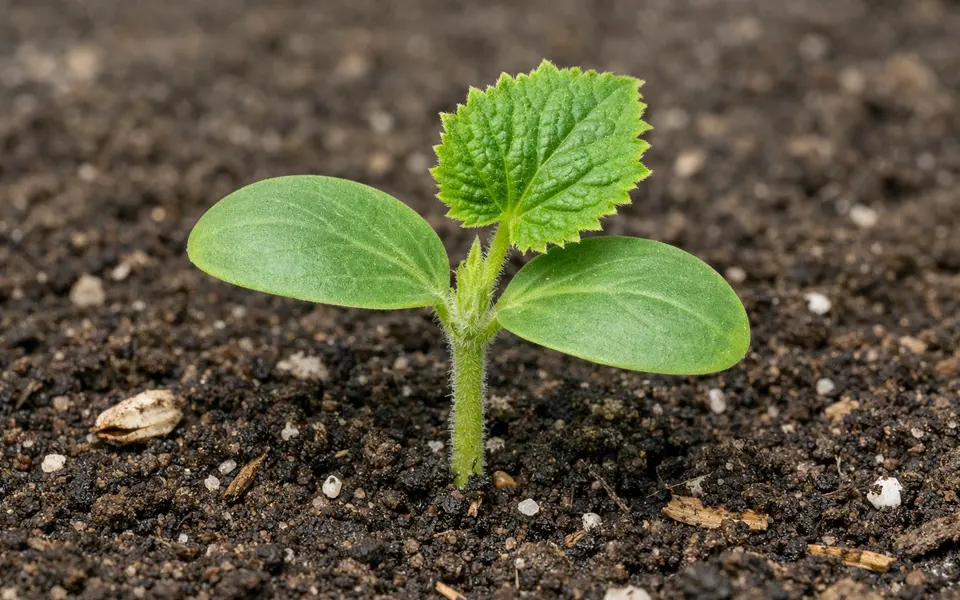
- Cotyledon form: rounded and fleshy (cucurbits) vs narrow and lanceolate (solanums)
- First true leaf shape: lobed or toothed (lettuce, brassicas) vs simple entire leaves (bean family)
- Stem hair and color: fuzzy stems often mean tomato/pepper; smooth green stems more common in brassicas
- Leaf venation: netted venation points to broadleaf vegetables; parallel veins suggest grass seedlings
- Plant spacing and row alignment: single plants in a row often indicate intended vegetables
Visual details that often mislead identification
Some visual cues are tempting but unreliable. Color is one of the weakest single signals because lighting, camera white balance, and soil stains change hues dramatically. A reddish stem under low light might be a genetic trait, stress pigment, or simply reflected mulch color. Similarly, tiny surface textures like slight hairiness can look very different depending on focus and macro capability of the camera.
Scale and size are also easy to misread without a reference. Many seedlings of very different species start with similarly sized cotyledons; a close-up without a coin, ruler, or finger can make an annual weed look like a vegetable seedling. Avoid making firm decisions from a single close crop — widen the frame to include something for scale and the surrounding soil surface.
Overfitting to one characteristic leads to mistakes. For example, leaf lobing on a second or third true leaf may tempt you to call a plant a specific vegetable, but some common weeds (mallow, young sow thistle) develop lobed leaves that mimic brassicas or lettuces. Likewise, a single row of volunteers is not proof of intentional planting; birds and wind can deposit seeds in neat lines, and compost can create clusters that look like purposeful sowing.
Finally, don’t rely solely on internet photos without matching multiple clues. Many online pictures are taken of mature seedlings or plants; juvenile stages often lack the defining traits shown in those images. Treat color, one-off shapes, or a single photographed angle as supporting evidence only, not proof.
- Color alone is unreliable due to light and soil effects
- Single close-ups lack scale — include an object for size reference
- Early leaf lobing can appear in both vegetables and weeds
- Online photos often show later stages that don’t match juvenile seedlings
Step-by-step comparison workflow for seedlings
A systematic comparison approach reduces guesswork. Start by listing two or three plausible identities (for example: tomato, volunteer nightshade, or common pokeweed) based on your first glance. For each candidate, write down three attributes you expect to see at this stage: cotyledon shape, first true-leaf margin, and stem hairiness or color. Then verify those attributes using the photos you collected.
Next, eliminate candidates that fail any single strong clue. If a candidate predicts paired rounded cotyledons but your seedling has narrow, lance-shaped cotyledons, remove it from consideration. Keep a short elimination log on your phone notes — it’s a quick record that helps if you revisit the bed later or ask a local gardening group for a second opinion.
Use garden context as a tiebreaker. If two species share identical early morphology, the row spacing and nearby seed packets often decide the likely match. For example, a narrow-leaved volunteer emerging between corn rows is far less likely to be a cucurbit than a single plant where you directly sowed squash seed. When the comparison remains ambiguous, plan an observation interval — mark the seedling and re-photograph after 4–7 days to watch true leaves develop.
When you want a structured side-by-side view, capture two consistent photos for each candidate: one close-up of leaf shape and one wider shot for habit and spacing. This lets you line up details such as venation and leaf attachment. If you need a refresher on comparing cotyledons and true leaves, our earlier guide on seedling identification explains the typical cotyledon and true-leaf progressions and is a helpful companion.
- List 2–3 likely species, note 3 expected early traits for each
- Eliminate any candidate that doesn’t match a strong trait (cotyledons, leaf margin, stem habit)
- Use row spacing or seed packet evidence as a context-based tiebreaker
- If still unsure, tag and re-check seedlings after 4–7 days to observe new leaves
How to use Seedio after your seedling photos
After you’ve followed the photo checklist — cotyledon close-up, first-true-leaf close-up, side view of stem, and a wider context shot — use Seed Identifier - Seedio as a structured second opinion. The app works best when it receives multiple views rather than a single cropped photo: that lets the model weigh cotyledon shape against leaf margin and garden context to suggest likely matches. Treat the app’s suggestions as hypotheses to verify, not infallible labels.
When you add photos to the app, include notes about planting location and recent activities: did you broadcast compost, plant two different rows, or sow cover crop seed? Those context notes help narrow possibilities between vegetables, grasses, and common weeds. Also mark whether you planted a species there intentionally; a labeled bed reduces ambiguity for volunteers versus intended crops.
Use the app’s feedback to prioritize actions. If Seedio suggests a high probability of a vegetable you planted, consider protecting the seedling with a small marker or ring. If the app suggests a likely weed or grass seed identification, follow your preferred weeding approach but still confirm visually after a few days — some desirable volunteers (self-seeding herbs) can resemble weeds early on.
If you want to compare your photos with reliable reference notes, check detailed cotyledon and true-leaf images in Seedling Identification: Cotyledons, True Leaves, and Early Plant Clues for family-level patterns and examples. That guide pairs well with the app suggestions when you need a technical second look or want to learn the visual differences on your own.
- Upload multiple angles — cotyledons, true leaves, side view, and context shot give best results
- Add planting notes: row, date, any compost or broadcast seeds nearby
- Use app suggestions to decide whether to tag, protect, or wait on a seedling
- Refer to trusted reference guides for family-level comparison when uncertain
Related guides
Ready to test your seedling photos with Seedio?
Use Seed Identifier - Seedio on your phone after you photograph cotyledons, first true leaves, stem, and the planting context. Seedio will organize multiple views and offer likely matches so you can decide whether to tag, protect, or remove a sprout. Try it at https://seedidentification.app/ and keep the photos and notes so you can revisit uncertain seedlings as they grow.
Take the next step →Frequently asked questions
How can I tell a vegetable seedling from a common weed?
Start with cotyledons and first true leaves. Vegetables often show family-specific cotyledon shapes (rounded fleshy cotyledons for cucurbits, lance-shaped for solanums, narrow for brassicas). Pair that with leaf margin and stem traits: vegetables like tomato have fuzzy stems and pinnate venation; many weeds have smoother stems and different venation. Context matters: a single seedling in a planted row is more likely a crop than a dense patch. If in doubt, tag the plant and re-check in 4–7 days to watch true leaves develop before you remove it.
When should I remove a seedling I think is a weed?
Avoid immediate removal unless the seedling clearly matches a persistent invasive or a grass flush that crowds crops. If identification is uncertain, mark the plant with a toothpick or small flag and wait 4–7 days for true leaves to appear; many decisive traits emerge then. Use the checklist: cotyledon shape, first true-leaf margin, stem hairiness, and bed context. If the plant remains ambiguous after observation and you suspect it will compete with your vegetables, remove it carefully to protect nearby roots.
Can grass seed identification be done from one photo?
Identifying grass seedlings from a single image is difficult. Grass seedlings have narrow, parallel-veined leaves and a different growth habit from broadleaf vegetables, but distinguishing between grass species or between grass and very narrow-leaved broadleaves often requires close images of leaf sheaths, ligules, and multiple growth stages. For a practical garden decision, a single photo can usually tell you if a seedling is grass-like versus broadleaf; finer species-level grass seed identification typically needs multiple stages, magnified detail, or an expert.
What’s the safest way to act when I find an unknown seedling in my vegetable bed?
Treat unknown seedlings cautiously. Photograph cotyledons, true leaves, stem, and the plant’s surrounding area; add a scale object like a finger or coin. Note recent planting, compost, or animal activity that could explain volunteers. If the seedling matches a vegetable you planted, protect and tag it. If it likely is a weed, remove it gently and monitor the spot. When a plant could be edible or poisonous, never assume edibility from one photo; seek local nursery help or wait for more identifying features before tasting or harvesting.