

Seedling Identification: Cotyledons, True Leaves, and Early Plant Clues
Compare cotyledons, first true leaves, stem hairs, leaf arrangement, and garden context to identify seedlings before scanning with Seedio for clues.
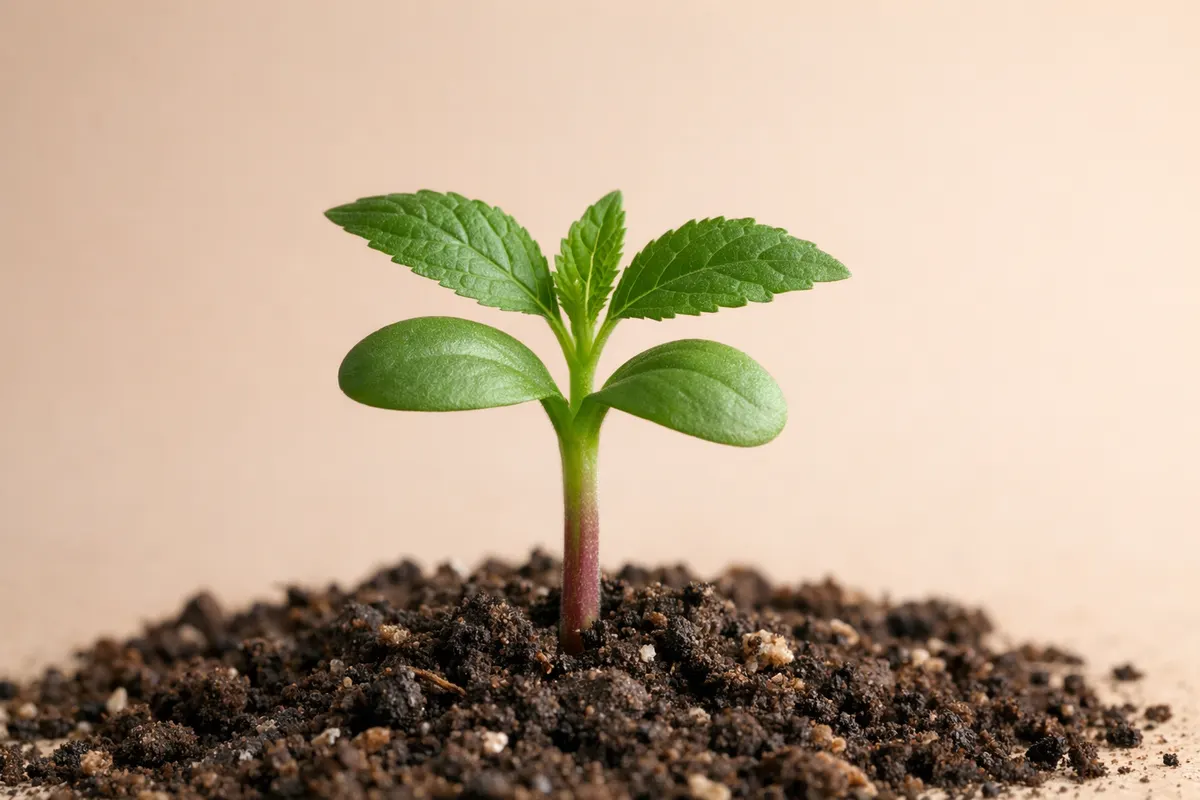
Quick answer for seedling identification
Seedling identification relies on stable early clues: the number and shape of cotyledons, the shape and venation of the first true leaves, stem thickness and hairiness, and contextual cues such as where the seedling grew and what was planted nearby. Photograph both cotyledons and the first true leaves with a simple scale — these combined clues often narrow possibilities enough for a confident shortlist.
Before true leaves develop, many seedlings look deceptively similar; you can often separate major groups (grasses vs. broadleaf, legumes vs. nightshades) quickly, but species-level certainty typically requires the first or second set of true leaves. Treat initial IDs as working hypotheses and gather one or two follow-up photos over days when possible.
A good photo workflow plus attention to stable traits will improve results whether you use a human key, a community forum, or an identification app. Scan the seedling after photographing both cotyledons and first true leaves to get the best automated match and then verify any important actions (planting, removal, consumption) with additional evidence.
Photo checklist
Good photos reduce ambiguity. When you take pictures, aim for a set that shows the whole seedling in context plus at least one close-up of the cotyledons and one close-up of the first true leaves. That combination gives both scale and identification detail.
Use a plain background where possible and include a simple scale such as a ruler, coin, or a 1 cm square. Avoid heavy zoom, motion blur, harsh shadows, or overexposure; they hide fine traits like tiny hairs, leaf margins, and venation that are often diagnostic.
Capture the planting context: was the seedling in a pot, garden bed, crack in the pavement, or a lawn? Nearby plantings, mulch type, and seed-starter media can be important clues. If you observed any seed remains, tags, or stampings, photograph them too — they’re useful corroboration.
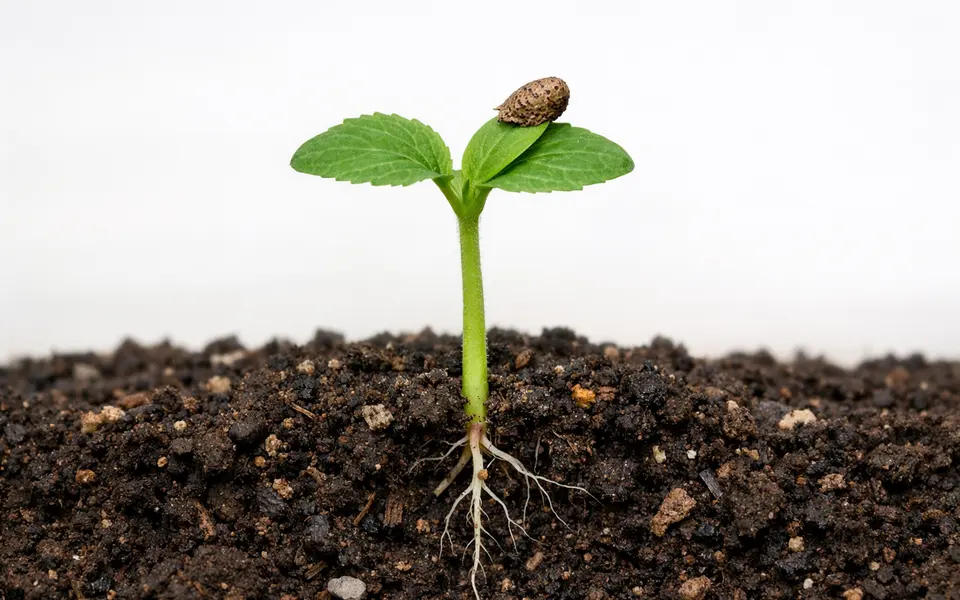
- Photograph the whole seedling, cotyledons, and first true leaves separately.
- Add a ruler, coin, or grid tray cell for scale.
- Show the stem node, underside of a true leaf, and any visible hairs.
- Capture garden bed, pot, tray label, mulch, lawn, or nearby plant context.
- Avoid heavy zoom, blur, harsh shadows, and overexposed pale leaves.
Visual clues
Focus on a small set of stable, observable traits rather than color alone; color varies with light, nutrient status, and age. The most reliable early clues are cotyledon number and shape (mono- vs. dicot), the form and venation of the first true leaves, stem characters (hairy or smooth, color, thickness), and overall growth habit (erect, trailing, rosette).
Cotyledons are often the earliest distinctive feature: peas, beans, and many legumes have thick, fleshy cotyledons that remain visible and serve as a clear sign of legumes. Tomatoes and peppers have narrow, delicate cotyledons with different shapes than brassicas, which usually have broader, flat cotyledons. Count and note cotyledon shape immediately after germination.
First true leaves reveal venation patterns and margins (entire, serrated, lobed) that quickly narrow the candidate list. For example, the first true leaves of tomato seedlings have pinnate-like lobing and hairy surfaces; brassica true leaves are typically smooth, rounded, and sometimes toothed. Also check petiole length and whether leaves are opposite or alternate on the stem — that arrangement is crucial for separating many families.
Other useful clues include stem hairs (trichomes) which can indicate nightshades or hairy weeds, the presence of a distinct seed remnant attached at the hypocotyl, cotyledon orientation (folded or flat), and root-collar color. Growth rate and branching pattern observed over a few days are additional clues when a single photo leaves doubt.
- Cotyledons: count, shape, thickness, and whether they remain visible.
- True leaves: margin, venation, hairs, and arrangement on the stem.
- Context: planted tray, garden bed, lawn, season, nearby labels, and seed remnants.
Examples by type
Group examples by visible category first: vegetables, common garden weeds, grasses, and woody seedlings. This approach reduces the search space. For vegetable seedling identification: tomatoes have compound-looking, lobed true leaves with fine hairs and a soft green stem; peppers have smoother stems and narrow, pointed true leaves; brassicas (cabbage, broccoli) form thick, rounded true leaves with a waxy sheen and broad cotyledons.
For weed seedling identification: pigweed (Amaranthus species) shows long, lanceolate cotyledons and quickly produces alternate, slightly hairy true leaves; lamb’s quarters has mealy undersides and triangular first true leaves with a distinctive toothed margin. Many common annual garden weeds have distinctive hairs, seedling smell (crushing a leaf), or rapid vertical growth that separates them from slower vegetables.
Grasses and grass-like seedlings (Poaceae, Cyperaceae) are distinct because they have narrow, linear cotyledons and a sheath-like base; their first leaves are typically rolled or folded with parallel venation. Tree seedlings: oak seedlings usually have lobed first leaves with a stout taproot collar and often show a distinct taproot or cotyledon scar; maple seedlings show opposite leaf arrangement almost immediately, which is a high-level identification shortcut.
Legumes (peas, beans) show paired, fleshy cotyledons and often a hinge or joint where the cotyledon attaches; true leaves can be pinnate or palmate depending on the species. Cucurbits (cucumber, squash) develop large, rounded cotyledons and very different textured true leaves that are usually rough and broadly lobed — taking a close-up of leaf texture helps separate cucurbits from other broadleaf seedlings.
- Group examples by visible category first.
- Compare stable traits instead of relying on color alone.
- Explain what extra photo would improve each category.
Compare likely matches
When you have multiple candidate matches, compare them using a ranked checklist: cotyledon number and shape, first true leaf venation and margin, leaf arrangement (opposite/alternate), stem characters (hairs, ridges), and scale (size relative to your reference). Give higher weight to structural traits (shape, venation, arrangement) and lower weight to color.
Create a short shortlist and look for corroborating context: planting history, surrounding species, and time of year. For example, a narrow cotyledon plus rolled first leaf suggests a grass; if the seedling is in a lawn or cereal bed, that context supports the grass hypothesis. If the same seedling appears in a vegetable tray, check seed-packet labels and tray mix for likely vegetables before assuming it’s a wild weed.
If one trait flips the likely family — for example, opposite leaves indicate many woody seedlings like maples or dogwoods rather than tomatoes — re-evaluate the other traits in that light. When a single photo creates ambiguity, take another angle showing the stem base, an underside of a first true leaf, and a wider context shot. Each additional angle often resolves the ambiguity quickly.
Use successive photos as a diagnostic series: close cotyledon, close true leaf (top and underside if possible), stem close-up showing nodes, and a contextual full-plant shot. Treat identifications as conditional: list the most likely matches and note which missing clue would confirm or exclude each one.
- Compare cotyledons, true-leaf shape, venation, stem hairs, scale, and growing context together.
- Treat similar-looking results as a shortlist until more clues agree.
- Use another photo angle when the answer changes important next steps.
Common mistakes
Relying on a single blurry close-up as the only evidence is one of the most common errors. That kind of photo often hides cotyledon count, leaf arrangement, and scale. A single clear full-plant photo plus one close-up of cotyledons and one of the first true leaves prevents most false positives.
Overweighting color leads to mistakes — nutrient stress, sun exposure, and media can alter leaf color. Instead of using color as a primary clue, focus on shape, venation, and arrangement. For example, many brassicas and mustard-family seedlings can look yellowish under cool conditions but are structurally distinct.
Skipping verification when the identification affects money, safety, or authenticity is dangerous. If a seedling could be a poisonous plant, a regulated invasive, or an expensive cultivar, get additional confirmation from a local extension, experienced grower, or professional before acting. Do not rely on a single app result for actions with significant risk.
- Using one blurry close-up as the only evidence.
- Relying on color instead of stable visible traits.
- Skipping confirmation when the result affects money, safety, or authenticity.
App workflow
Use the app as a rapid first pass after you collect the recommended photos. Photograph the full seedling in context, then take a close-up of the cotyledons and a separate close-up of the first true leaves (top and underside if possible). Include a scale in at least one image. This photo set gives the app the features it needs to narrow candidates reliably.
Scan the seedling after photographing both cotyledons and first true leaves for a better identification result. The app’s match quality improves when it can detect cotyledon shape, true-leaf venation, and leaf arrangement from your images. If the app returns multiple likely matches, use the compare-matches checklist above to narrow them further with an extra image or two.
Treat the app output as a helpful hypothesis, not definitive proof. The app is designed to speed identification and give you a shortlist to check. For uncertain or high-stakes results — suspected weeds that affect crops, potential poisonous plants, or valuable cultivars — gather more photos across 2–4 days and verify with a local expert before acting.
If you’re working on iOS, use the app to store and timestamp your photos so you can track growth and changes; that time series often makes identification straightforward as true leaves develop and species-specific traits emerge.
Next steps by confidence level
Strong match: save the images, note the reasoning and context (where it grew, planting date), and proceed with your intended action. If the identification affects planting layout or garden management, tag the plant in your records so later growth stages can be compared against the initial ID.
Partial match: collect one or two targeted follow-up photos focusing on the missing clues that split your shortlist — for example, underside venation, node spacing, or a stem-hair close-up. If the shortlist contains both edible crops and likely weeds, pause before removing or consuming the plant and seek quick confirmation with additional photos or from a trusted local source.
Uncertain match: avoid irreversible actions. Let the seedling grow for a few days while documenting changes (leaf shape, branching, hairs). Use a second pass with the app or consult extension services, gardening forums with region-specific expertise, or a local nursery. For any plant that could be toxic, allergenic, or a regulated invasive, obtain professional confirmation.
- Save strong matches with context.
- Collect one missing clue for partial matches.
- Confirm important results before acting.
Limitations
Seedlings are inherently limited for conclusive identification. Many species only develop diagnostic features (flowers, fruit, full leaf sets) weeks or months after germination. Early-stage IDs work best for separating families or large groups, but species-level certainty is commonly impossible before several true leaves appear.
Do not rely on a single photo or a single automated result for decisions that affect health, finances, or legal compliance. Identification apps and keys are tools to reduce the candidate list; they do not replace expert verification when stakes are high. This is especially true for plants that might be poisonous, allergenic, regulated by quarantine laws, or economically valuable cultivars.
Regional variation and cultivation practices can change how seedlings look; the same species can appear different in another climate or soil. When regional accuracy matters (for example, identifying local invasive species or regulated weeds), consult local authorities or extension services in addition to photographic identification.
Finally, seedlings rarely reveal variety or cultivar traits. If you need cultivar-level confirmation (for seed provenance, patent issues, or premium crop identity), plan to wait for later growth stages and combine photographic evidence with provenance documents or lab tests where appropriate.
Related guides
Scan seedlings after true leaves appear
Use Seedio after you photograph the full seedling, cotyledons, first true leaves, and growing context. Treat the match as a shortlist, then verify before removing, transplanting, eating, or managing a plant.
Take the next step →Frequently asked questions
How soon can I identify a seedling reliably?
You can often separate major groups (grasses vs. broadleaf, legumes vs. nightshades) within days of germination by looking at cotyledon number, cotyledon shape, and early leaf arrangement. Species-level identification is more reliable after the first true leaves appear and more so after the second set of true leaves develop; plan to recheck a week or two later if the early clues are ambiguous.
What are the most important photos to take for identification?
Take a set: (1) a full-plant shot showing context and scale, (2) a close-up of the cotyledons, and (3) a close-up of the first true leaves (top and underside if possible). Include a ruler or coin in at least one image. If the stem has hairs or a distinct node, add a stem close-up as well.
Can an app tell the difference between a vegetable seedling and a weed?
An app can often distinguish vegetables from common weeds when given clear photos of cotyledons and true leaves, because structural traits differ between families. However, apps can produce ambiguous results when seedlings are young or under stress; use app results as a shortlist and confirm high-stakes identifications with follow-up photos or local expertise.
What should I do if the seedling could be poisonous or invasive?
Do not handle, ingest, or transplant seedlings you suspect might be poisonous or invasive without confirmation. Collect clear photos of cotyledons, true leaves, and the growing context, and then seek confirmation from a local extension service, horticultural expert, or certified professional before taking action.